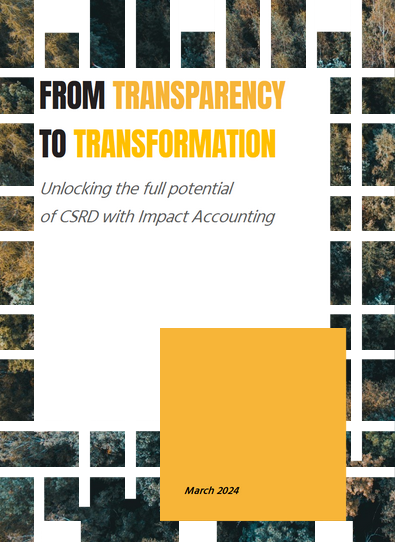
Our new report, developed in collaboration with Impact Institute and Singapore Management University, calculates the True Profits of the 20 largest European companies and finds that their combined financial profits of €209 billion would turn into a net societal loss of €19 billion once real social and environmental costs are counted. “Europe does not lack sustainable solutions. It lacks a market that rewards them,” says Werner Schouten, director of the Impact Economy Foundation.
True Profits
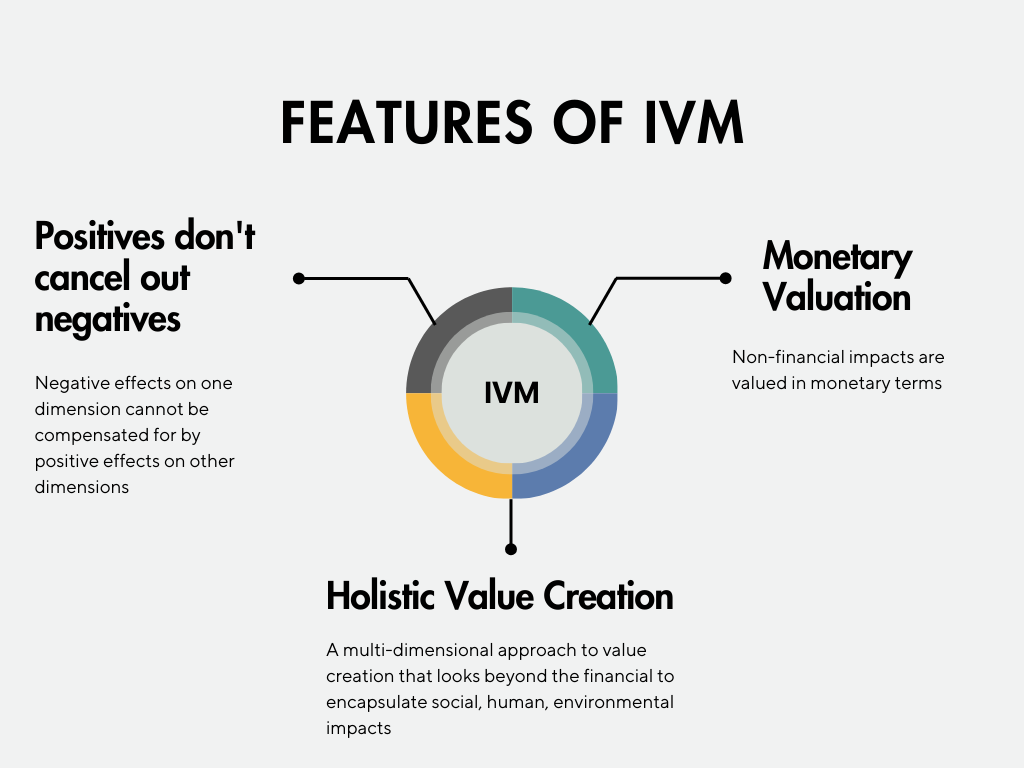
The study introduces a new metric: True Profit, a company’s financial profit after accounting for its key positive and negative social and environmental externalities. Grounded in the Impact Weighted Accounts Framework (IWAF), it gives businesses, investors and policymakers a new economic compass: not just which companies are financially profitable, but which are genuinely profitable for society.

Total Negative Externalities of all Assessed Companies in relation to Financial Profit.
Key findings
The report analyses the True Profits of the 20 largest companies in Europe. On the one hand, total annual positive contributions to society of the 20 companies analysed amount to approximately € 427 billion. These benefits include customer value, employee well-being and financial returns to investors.
At the same time:
- Climate-related costs alone absorb 60% of companies’ reported profits.
- When social and environmental costs are fully accounted for, combined profits of €209 billion would turn into a net loss of €19 billion.
- For every euro of revenue generated, companies generate €0.16 in social and environmental costs, which are not reflected in profits.
These findings underline that Europe’s current economic model is heavily dependent on and favours business models that shift costs to society, while disadvantaging companies that invest in cleaner, more resilient solutions.
Making impact profitable: the opportunity for Europe
The report concludes that Europe can be competitive and sustainable, only if markets reward impact. The report argues for making impact profitable through three levers: a True Profit Tax that links corporate tax rates to net societal impact; impact-adjusted interest rates that lower the cost of capital for impactful business models; and balance sheet reform that recognises climate and nature investments as long-term assets.